
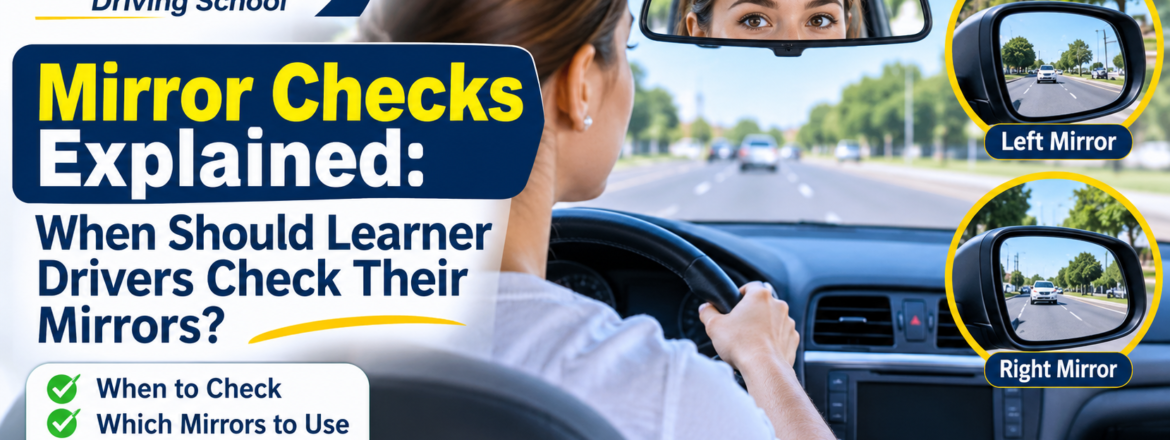
Mirror checks are one of the most important habits every learner driver must develop. Regularly checking your mirrors helps you understand what is happening around your vehicle, identify approaching traffic, maintain a safe distance and make better driving decisions. Whether you are a beginner or preparing for your Practical Driving Assessment (PDA), knowing when and how to check your mirrors is essential for safe driving.
Thank you for reading this post, don't forget to subscribe!At Brilliant Driving School, we help learners develop safe driving habits through professional, personalised driving lessons in Perth. Our experienced driving instructors guide beginners through essential skills, including mirror checks, observation, road positioning, lane changes and hazard awareness.
If you are learning to drive in Perth, this guide explains when you should check your mirrors, which mirrors to use and how to improve your observation skills before your driving test.
Why are Mirror Checks Important When Driving?
Mirrors give drivers a better understanding of surrounding traffic and potential hazards. They help you monitor vehicles behind you, identify approaching road users and check whether it is safe to change your position.
Developing good mirror-checking habits can help you:
- Identify vehicles approaching from behind.
- Maintain a safe following distance.
- Check blind spots before changing lanes.
- Prepare safely before turning or stopping.
- Monitor cyclists, motorcyclists and other road users.
- Improve overall road awareness and driving confidence.
- Demonstrate good observation skills during your PDA.
For learners taking a driving lesson in Perth, practising regular mirror checks is an important part of becoming a confident and responsible driver.
Which Mirrors Should Learner Drivers Check?
Before driving, make sure your mirrors are correctly adjusted. Every mirror provides different information about the road.
1. Rear-View Mirror
The rear-view mirror allows you to see traffic directly behind your vehicle.
Use it to:
- Monitor vehicles following you.
- Check traffic before slowing down.
- Observe vehicles approaching from behind.
- Assess the distance of traffic before changing speed.
- Check behind before stopping or pulling over.
2. Left Side Mirror
The left-side mirror helps you monitor traffic and road users on the left side of your vehicle.
Check it when:
- Moving towards the left side of the road.
- Preparing for a left turn.
- Parking near the kerb.
- Returning to the left lane.
- Checking for cyclists or motorcyclists.
3. Right Side Mirror
The right-side mirror helps you observe traffic on your right.
Check it when:
- Preparing for a right turn.
- Changing lanes to the right.
- Moving away from the kerb.
- Returning to the traffic lane.
- Monitoring vehicles approaching from behind on your right.
Remember, mirrors do not show everything around your vehicle. Always check your blind spots when required before changing direction or position.
When Should Learner Drivers Check Their Mirrors?
Knowing when to check your mirrors is just as important as knowing how to use them. Here are some situations where mirror checks are particularly important.
1. Before Changing Lanes
Before changing lanes, check your rear-view and relevant side mirror to understand the position and speed of nearby vehicles.
Follow these steps:
- Check your rear-view mirror.
- Check the relevant side mirror.
- Signal your intention.
- Check your blind spot.
- Change lanes only when it is safe.
Never rely on mirrors alone when changing lanes.
2. Before Turning Left or Right
Always check your mirrors before making a turn. Look for vehicles, cyclists and motorcyclists that may be approaching from behind or alongside your vehicle.
For example, before turning left, check your left-side mirror for cyclists or other road users who may be travelling beside you.
3. Before Slowing Down or Stopping
Before reducing your speed significantly or stopping, check your rear-view mirror.
This helps you understand how close the vehicle behind you is and whether you need to slow down gradually.
Avoid sudden braking unless an emergency requires it.
4. Before Pulling Over
When preparing to pull over, check your rear-view and relevant side mirror. Signal your intention and check your blind spot before moving towards the kerb.
Make sure there is enough space and that your manoeuvre will not create a hazard for other road users.
5. Before Moving Off
Before moving away from a parked position, check your mirrors and blind spots.
Look for approaching vehicles, cyclists and pedestrians. Signal when required and move off only when it is safe.
6. After Completing a Turn or Lane Change
After completing a turn or lane change, check your mirrors again to understand your new position in traffic.
This helps you maintain awareness and prepare for the next driving situation.
7. When Approaching Traffic Hazards
When approaching intersections, pedestrian crossings, roundabouts or areas with changing traffic conditions, check your mirrors as appropriate.
This helps you understand what is happening behind you while you focus on the road ahead.
What Is the MSM Routine in Driving?
One useful observation method taught during driving lessons is the MSM routine, which stands for:
M
Mirrors
Check your rear-view and relevant side mirrors to understand surrounding traffic.
S
Signal
Communicate your intention to other road users at the appropriate time.
M
Manoeuvre
Check that it is safe, including blind spots where required, before completing your movement.
Practising the MSM routine during your driving lessons in Perth can help you develop consistent observation habits and become more confident behind the wheel.
Read Also – How to Get Learners Permit WA
Common Mirror-Checking Mistakes Learner Drivers Should Avoid
Many beginners make simple observation mistakes while learning to drive. Recognising these mistakes early can help you improve.
- Checking mirrors too late: Check your mirrors before making a change in speed or direction, not after starting the manoeuvre.
- Forgetting side mirrors: Looking only at the rear-view mirror does not provide a complete picture of surrounding traffic.
- Looking at mirrors for too long: Mirror checks should be brief. Keep your attention primarily on the road ahead.
- Forgetting blind spots: Mirrors cannot show every area around your vehicle. Check blind spots before moving sideways or changing lanes.
- Checking mirrors without acting on the information: Mirror checks are useful only when you understand what you see and adjust your driving safely.
- Developing inconsistent habits: Regular observation should become part of your normal driving routine.
How Can Driving Lessons Help Improve Mirror-Checking Skills?
Learning when to check mirrors takes practice, patience and proper guidance. A professional driving instructor in Perth can help you understand observation techniques and apply them in real traffic situations.
At Brilliant Driving School, our personalised one-on-one driving lessons focus on:
- Correct mirror adjustment before starting a lesson.
- Developing regular mirror-checking habits.
- Safe lane changes and turning techniques.
- Blind-spot awareness.
- Traffic observation and hazard perception.
- Preparing for intersections and roundabouts.
- Improving confidence before the Perth PDA.
We offer manual and automatic driving lessons for beginners, experienced learners, overseas licence holders and drivers preparing for their practical assessment.
Our goal is to help every learner become a safe, confident and responsible driver.
Mirror Checks and Your Perth Driving Test (PDA)
Good observation is an important part of safe driving and practical driving assessment preparation.
During your PDA, you should demonstrate that you can observe surrounding traffic, respond to changing road conditions and make safe decisions.
Before your assessment, practise:
- Checking mirrors regularly and at appropriate times.
- Using mirrors before changing speed or direction.
- Checking blind spots before moving sideways.
- Observing cyclists and motorcyclists.
- Maintaining awareness at intersections and roundabouts.
- Combining mirror checks with appropriate signalling.
A good driving instructor can help identify observation mistakes and provide feedback so you can improve before your test.
Book Professional Driving Lessons in Perth with Brilliant Driving School
Ready to improve your mirror checks, observation skills and confidence behind the wheel? Choose Brilliant Driving School, your trusted driving school in Perth, for professional and affordable driving lessons with experienced male and female driving instructors.
Whether you are a beginner, learning manual or automatic driving, preparing for your Perth PDA or looking to refresh your driving skills, our personalised one-on-one lessons will help you become a safer and more confident driver.
With expert guidance, practical road experience and individual feedback, we help you develop the essential skills needed to drive safely on Perth roads.
Don’t wait to become a better driver – start learning with confidence today!
