
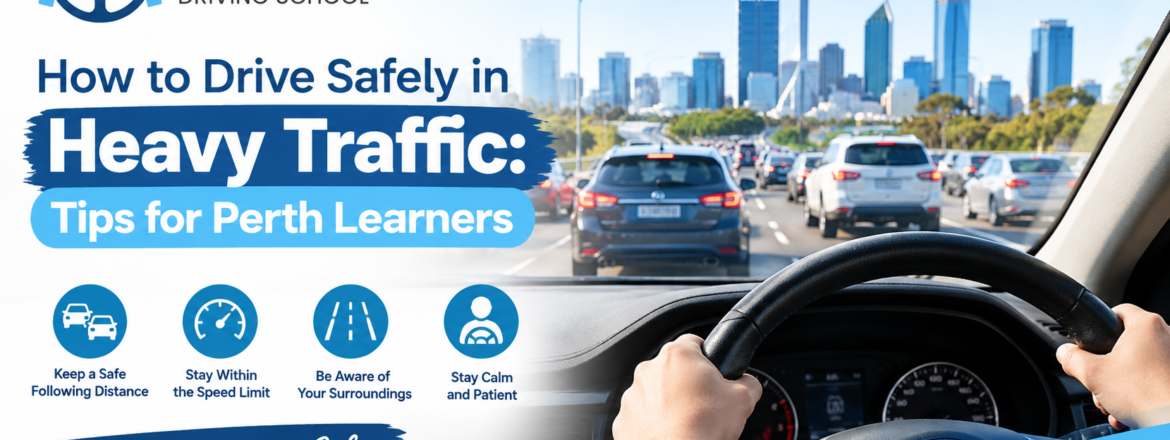
Driving in heavy traffic can feel stressful when you are still learning. Busy intersections, multiple lanes, sudden braking, merging vehicles and impatient drivers can make even a familiar Perth route feel challenging. The good news is that heavy-traffic driving becomes easier with the right techniques, regular practice and a calm approach.
Thank you for reading this post, don't forget to subscribe!For Perth learners, practising in gradually busier traffic conditions is an important part of developing real-world driving skills. Transport WA recommends progressing from low-traffic areas to moderate and heavier traffic as your confidence develops.
If you are looking for a car driving school Perth learners can rely on, Brilliant Driving School provides personalised training designed to help learners improve vehicle control, observation, decision-making and confidence on Perth roads.
Why is Heavy Traffic Challenging for Learner Drivers?
Heavy traffic requires you to manage several things at the same time. You need to:
- Monitor vehicles around you
- Maintain a safe following distance
- Check mirrors regularly
- Watch traffic lights and road signs
- Identify hazards early
- Change lanes safely
- Enter intersections carefully
- Respond smoothly when traffic slows or stops
- Stay within the speed limit
- Make decisions without rushing
For new drivers, trying to process everything at once can create anxiety. The solution is not to drive faster or copy the behaviour of other motorists. Instead, focus on developing good observation and decision-making habits.
1. Stay Calm and Avoid Rushing
One of the most important heavy-traffic driving tips is to remain calm.
If traffic becomes busy, give yourself more time to make decisions. You do not need to take every available gap, change lanes immediately or accelerate simply because another driver is behind you.
A calm driver can:
- Look further ahead
- Identify hazards earlier
- Make better decisions
- Maintain smoother vehicle control
- Avoid unnecessary braking and acceleration
Remember that safe driving is more important than keeping up with impatient drivers.
2. Maintain a Safe Following Distance
Traffic can stop suddenly, particularly around intersections, pedestrian crossings and congested roads.
In WA, drivers should maintain at least a two-second gap from the vehicle ahead in good conditions, increasing the distance when road or weather conditions are poor.
A simple technique is to choose a fixed roadside object. When the vehicle ahead passes it, count:
“One thousand and one, one thousand and two.”
If your vehicle reaches the same point before you finish counting, you are following too closely.
3. Look Beyond the Car Directly in Front
Don’t focus only on the brake lights of the vehicle immediately ahead.
Try to look further down the road. For example, if several cars ahead begin braking, you can prepare by gradually reducing your speed instead of waiting until the car directly in front brakes suddenly.
Look for:
- Brake lights
- Traffic lights
- Pedestrians
- Cyclists
- Vehicles entering from side streets
- Queues at intersections
- Lane closures
- Roadworks
- Emergency vehicles
This gives you more time to react.
4. Check Your Mirrors Regularly
Mirror checks are particularly important in heavy traffic because vehicles can approach from several directions.
Develop a routine of checking:
- Rear-view mirror
- Left-side mirror
- Right-side mirror
- Blind spots before changing lanes
Good observation is also important when preparing for your practical driving assessment. Transport WA highlights mirror use, blind-spot checks and hazard awareness as important driving skills.
5. Change Lanes Only When It is Safe
Changing lanes in heavy traffic requires patience.
Before changing lanes:
- Check your mirrors.
- Signal early.
- Check your blind spot.
- Make sure there is enough space.
- Give way to vehicles already in the lane.
- Move smoothly when it is safe.
WA’s Drive Safe guidance specifically recommends mirror checks, signalling, blind-spot checks and giving way to vehicles already in the lane you are entering.
Never feel pressured to change lanes just because another driver is waiting behind you.
Read Also – Driving Lessons do you Need to Pass your Test in WA
6. Be Careful Around Intersections
Busy intersections can be particularly difficult for learner drivers.
Before entering an intersection, consider:
- Which direction you are travelling
- Traffic lights and signs
- Pedestrians
- Vehicles turning across your path
- Vehicles entering from side roads
- Your lane position
- Whether there is enough space ahead
If you are turning across traffic, do not rush simply because you have been waiting. Transport WA’s learner-driving guidance recommends taking the next suitable gap rather than taking an unsafe gap under pressure.
7. Avoid Tailgating
Heavy traffic does not mean you should drive extremely close to the vehicle ahead.
Tailgating reduces your reaction time and leaves less room if the vehicle in front brakes suddenly.
Instead, maintain a comfortable safety gap and adjust it according to:
- Your speed
- Weather
- Road surface
- Traffic conditions
- Visibility
A larger gap is particularly useful when traffic is unpredictable.
8. Manage Stop-and-Go Traffic Smoothly
Stop-and-go traffic can be tiring for learners.
Try to avoid repeatedly accelerating hard and then braking suddenly. Instead, look ahead and anticipate traffic movement.
If vehicles ahead begin moving slowly, you can gradually move forward while maintaining a safe gap. When traffic stops, brake smoothly and keep your attention on what is happening further ahead.
Smooth driving helps improve comfort and vehicle control.
9. Keep the Correct Lane Position
In busy traffic, good lane positioning helps other road users understand what you are doing.
Stay centred within your lane and avoid drifting toward lane markings.
If you need to turn or prepare for an upcoming manoeuvre, plan early rather than making a last-second lane change.
WA road rules also include specific requirements around keeping left and using lanes depending on the road, speed limit and signs.
10. Don’t Let Other Drivers Pressure You
This is one of the biggest challenges for learner drivers.
You may encounter drivers who:
- Follow too closely
- Change lanes aggressively
- Sound their horn
- Overtake unnecessarily
- Accelerate through gaps
Do not copy unsafe behaviour.
Your responsibility is to drive safely and legally. If you need additional time to assess a situation, take it when it is safe to do so.
11. Practise Heavy Traffic Gradually
You don’t have to start your first lesson on the busiest road in Perth.
A better approach is to gradually increase difficulty:
Quiet streets → Moderate traffic → Busy suburban roads → Major roads → Peak traffic
Transport WA recommends building skills progressively, moving from quiet locations into moderate traffic and eventually practising more complex conditions such as busy traffic, merging and lane changes.
This gradual approach can help reduce anxiety while building practical experience.
12. Practise With an Experienced Driving Instructor
Professional instruction can make a significant difference when learning to handle busy roads.
A qualified instructor can help you practise:
- Lane changes
- Merging
- Roundabouts
- Busy intersections
- Traffic lights
- Safe following distances
- Parking in busy areas
- Observation techniques
- Hazard awareness
- Peak-hour driving
- Driving-test preparation
If you prefer learning with a female instructor, a female instructor Perth learners feel comfortable with can provide patient, personalised guidance while helping you develop practical road skills.
Brilliant Driving School offers both female and male instructors, allowing learners to choose an instructor they feel comfortable learning with.
Heavy Traffic Practice for Your PDA
If your goal is to prepare for the WA Practical Driving Assessment (PDA), don’t practise only quiet streets.
Your training should eventually include a variety of real-world conditions. Transport WA states that the PDA assesses a learner’s ability to drive safely and confidently in real traffic conditions.
Practise:
- Busy intersections
- Lane changes
- Roundabouts
- Traffic lights
- Merging
- Parking
- Reversing
- Different speed zones
- Moderate and heavy traffic
- Hazard awareness
The more varied your supervised driving experience, the better prepared you can become for different road situations.
Choose Brilliant Driving School for Perth Driving Lessons
Learning to drive in heavy traffic takes time, practice and patience. You don’t need to master everything in one lesson. With consistent training, you can gradually become more comfortable reading traffic, maintaining safe distances, changing lanes and making confident decisions.
If you’re searching for a car driving school Perth learners can trust, Brilliant Driving School provides personalised driving lessons for beginners, experienced learners and drivers preparing for their PDA.
Our instructors can help you build practical skills in both manual and automatic vehicles, with lessons tailored to your current experience and learning goals.
Ready to become a safer and more confident Perth driver?
Book your driving lesson with Brilliant Driving School and start building the skills you need for everyday Perth traffic and your driving test.
Frequently Asked Questions
